
Burst Fade: 20 Best Haircuts for Men (Low, Mid & Taper)

Most guests who ask for a burst fade think they’re requesting a shorter haircut change, when what they’re really choosing is a different angle. A standard fade climbs the side of the head in a straight line, but this semi-circular fade curves outward from a shortest point behind the ear, so the back stays longer and the neckline keeps its weight. That curved sweep is why older barbers still ring it up as a radial fade or halo taper, and the sunburst effect is the main reason to book it.
I’ve watched the same semicircle work on straight hair, wavy hair, and tight curls, because the arc follows your growth pattern instead of fighting it. Set it low, mid, or high; keep tight sides with a short crop on top, or let it frame mohawks, mullets, and longer textured styles. The cut blends short to long more cleanly than most bold options. The catch is regrowth: the shape around the ear softens inside two weeks, so refresh it early and rebook before three weeks pass.
What is a Burst Fade?
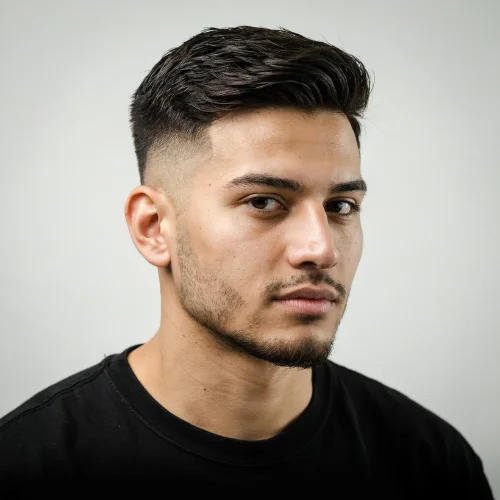
Most clients who sit down in an unfamiliar shop expect a straight fade sitting level around the head, and the burst fade goes against that habit. It’s a rounded taper that tightens to the shortest setting behind the ear, then blends outward in an arc and leaves the neckline and back untouched.
After years behind the chair, I judge every first booking on three variables: depth, contrast, and shape to the head. A T-blade or outliner cuts the curves, but an uneven arc or patchy blend shows the barber’s mistakes. That subtle detail is why it’s harder to cut than a full fade.
Burst Fade vs Mullet

Here’s what most chairs get wrong: a mullet isn’t a type of fade, and a burst isn’t a style built on length. One shapes the back, the other carves the sides and leaves the top free. That’s why good stylists combine them instead of picking one.
The burst fade mullet works because a rounded arc around a shaved temple creates sharper contrast than an undercut, while the back keeps longer hair. A short mullet paired with shorter sides gives a gradual contrast, and a long mullet turns it into a distinct contrast.
Burst Fade vs Drop Fade (and Taper / Skin Fade)
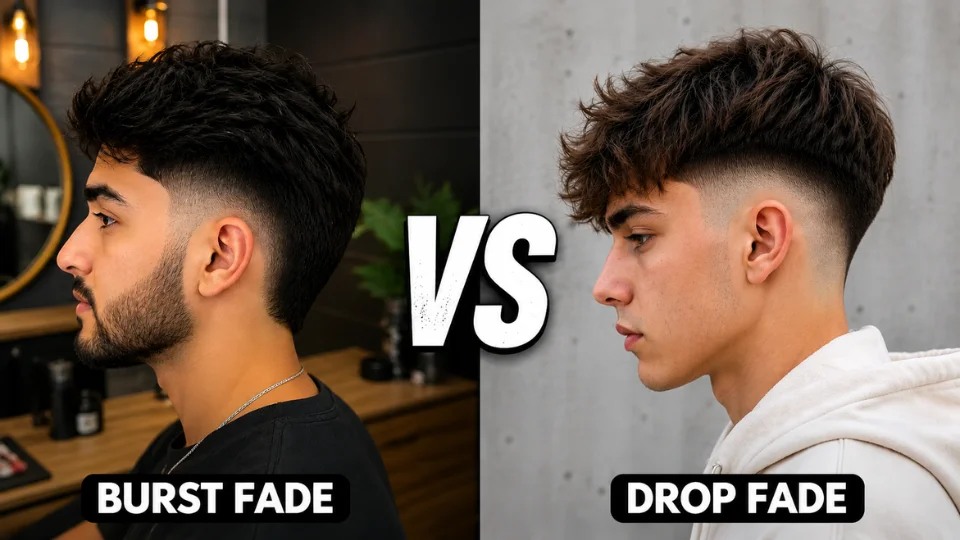
That long back is how you tell them apart. A burst semicircle curves around the ear and leaves the back at length, while a drop fade dips lower and follows the head with the back faded. Most of the confusion I see comes from barbers using the two names interchangeably, so bring a photo.
Taper depth is a separate decision from shape. A taper fade grows out gently and changes subtly. A skin burst fade zeroed to bare skin has the sharper look of any skin fade, but the regrowth line shows fast, so upkeep goes up. Round faces and wider faces gain an angular look from that closeness, and longer faces need fullness at the crown.
Who Does a Burst Fade Suit? / How to Choose the Right One
Honestly, the face-shape rule is the last thing I check. Head shape comes first. A flat back of the head needs a longer back or a textured top that adds shape. Dense hair with real bulk carries the burst differently from fine or thin hair, where a taper finish softens gracefully.
Oval heads can wear a fade at any height. A round or square jaw balances with mid-to-high fades and high arcs. Oblong, heart, and diamond faces want a lower arc so the width stays at the temples and cheekbones. Coily and 4C hair should be cut on dry hair so the barber can account for shrinkage.
Low vs Mid vs High Burst Fade

Once you know it suits you, arc height is the real decision. A low burst fade sits as an arc above the ear. It hugs the ear in a soft curve, drops low behind the head, and stays subtle enough for strict dress codes. I steer first-timers here because it can grow out for about 3 weeks before rebooking.
The mid burst fade puts the arc at temple level, around the temple midpoint. It’s the most requested because it looks balanced on all faces and needs a trim every 2–3 weeks. A high burst fade puts the arc above the temples, so tight curls, waves, and the top are most visible. That maximum contrast makes it the least forgiving, and it needs a touch-up every 2 weeks.
Burst Fade Styles
Classic / Clean Burst Fade

A classic burst fade lives on one balanced arc around the ear. Start it mid, not too low, and it suits all hair types. A clean burst fade down to skin adds drama; a guard instead of a shaved finish looks softer. Touch it up every 2–3 weeks.
Burst Fade Mullet
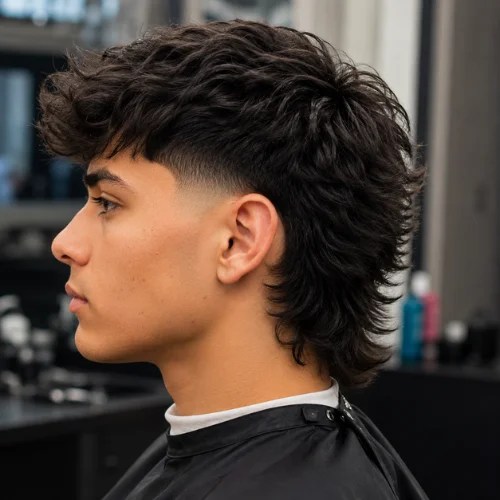
The burst fade mullet, a modern mullet, pairs tight sides from a skin burst at the temples with a long back in different lengths, so blending matters. Oval faces suit a high burst with crown textured; oblong faces, a tight burst and shorter back. Texture clay makes a spiky textured back or defined back; skin at the nape needs regular upkeep.
Burst Fade Mohawk
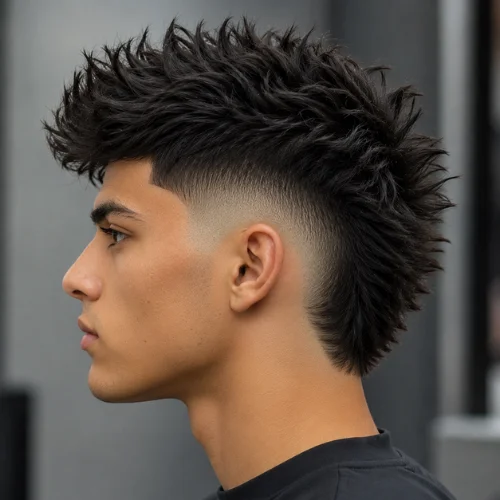
The burst fade mohawk uses curved sides to frame a single strip. Thick top hair helps, but a narrow, textured centre strip works on fine hair too. Expect the shape to soften within 2 weeks.
Burst Fade Faux Hawk
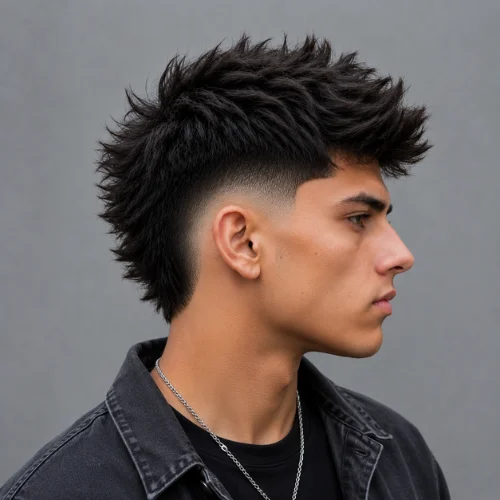
The burst fade faux hawk keeps faded sides that are not shaved, so the hawk look comes from styling, not an undercut design. It’s less aggressive and less commitment. Blow-dried upward with texture clay or pomade, it finishes in a small spike.
Curly Burst Fade
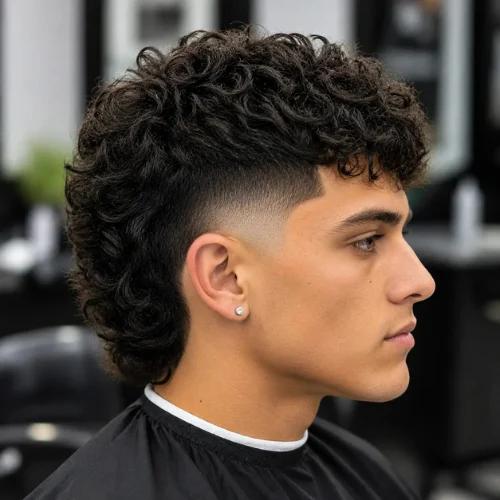
A curly burst fade works best as a low burst fade or temple fade, so the curly top gets the height. Keep length at the front for a curly fringe or curly crop, and blend the transition scissor-over-comb. Unruly curls usually mean dry hair, so use curl cream, curl-defining products, and a diffuser.
Straight Hair Burst Fade
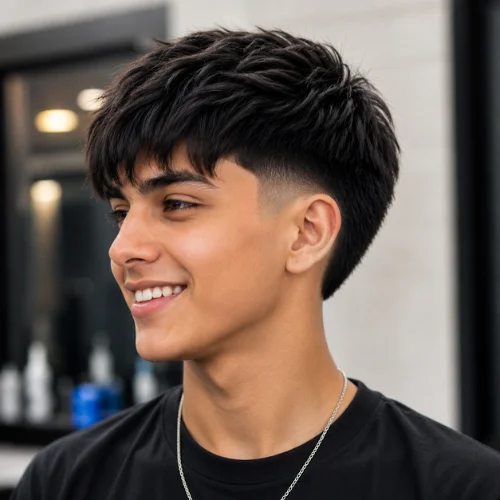
A straight hair burst fade gives you the sharpest arc of any hair type, but a flat top next to it looks unfinished. Ask for point-cut ends and a fuller top, then use texture spray and a loose side-sweep off your natural part for real movement.
Wavy Hair Burst Fade
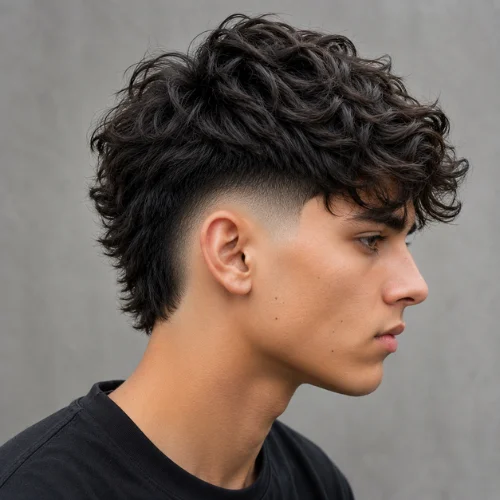
Check the wave direction first, then pick the fade. A low arc lets the waves flow into the sides, and a mid arc takes bulk off heavy waves. Keep enough length for one full bend, and work in texture clay with your fingers so the wave movement in a wavy hair burst fade stays defined.
Textured / Short-Top Burst Fade
The short-top burst fade is the easiest entry point for short hair, with choppy layers framing a sharp burst. Thick hair needs a lighter layered top, straight hair needs soft layers for layered volume, and a point-cut fringe keeps the textured crop messy on purpose. Get the top trimmed every 5–6 weeks to keep your textured burst fade crisp.
Burst Fade French Crop
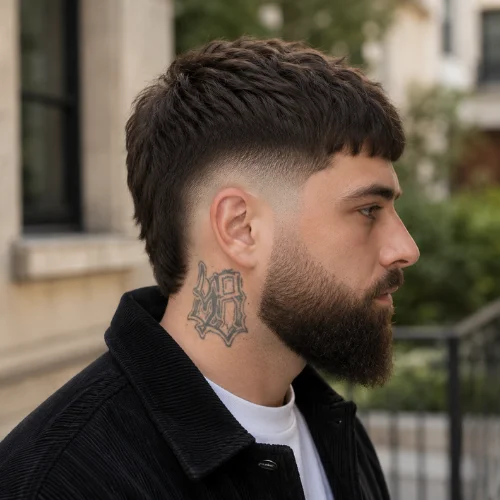
The French crop pushes everything into a forward fringe, and the burst fade’s curved sides balance that heavy front. A blunt fringe adds structure to round faces, while rough layers soften the hard line on square faces.
Burst Fade Quiff
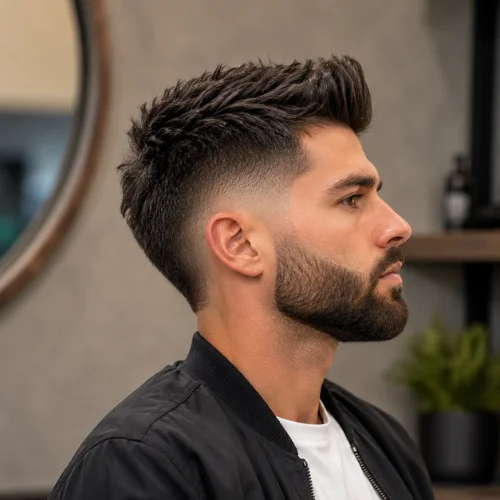
A quiff needs 2.5–3 inches at the front to lift properly. Skip the greasy pomade: texture powder at the roots gives you a matte lifted front that suits the clean sides of a burst fade.
Burst Fade Comb Over
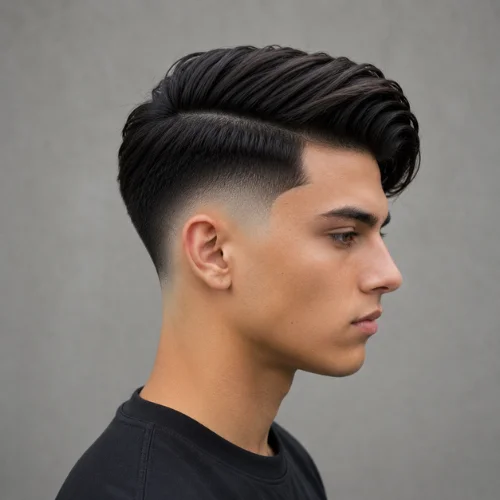
Product matters more than the clippers here. A matte molding paste keeps volume without the shine, and a shaved hard part gives the curve something to line up with. Blow-dry with a vented brush, lifting at the root, and the comb-over holds all day.
Burst Fade Slick Back
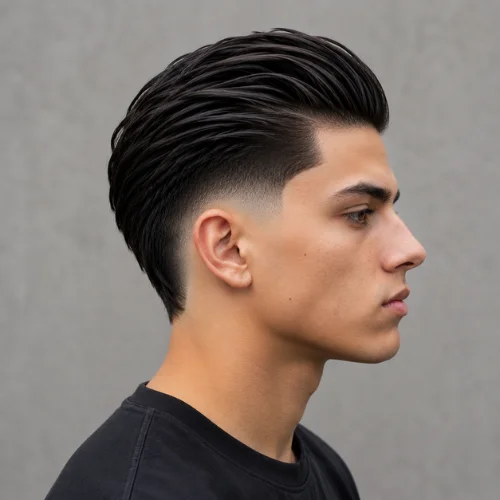
Length comes first. You need 3–4 inches on top, and slightly wavy hair often grips better than straight hair. Comb strong-hold gel through damp hair in one pass so the slick back sits flat while the burst frames it.
Burst Fade Buzz Cut
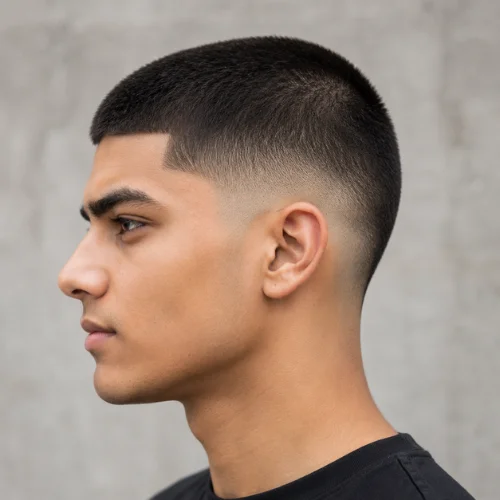
It’s low maintenance in the morning, but regrowth shows within a week. The pairing works because a buzz cut leaves the sides clean for a sharp burst. Keep the drop off the back, or ask for the top slightly longer for contrast.
Burst Fade with Design
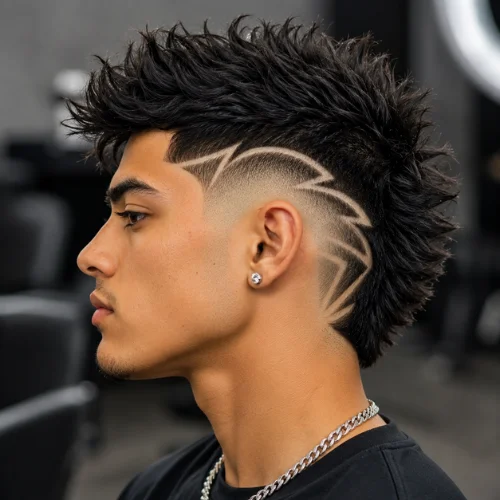
Bare sides make the canvas. Razor lines look crisp for about 2 weeks before regrowth blurs them, so keep it simple. Geometric shapes that follow the curve make a burst fade with design look deliberate, not like a sticker.
Burst Fade with Beard
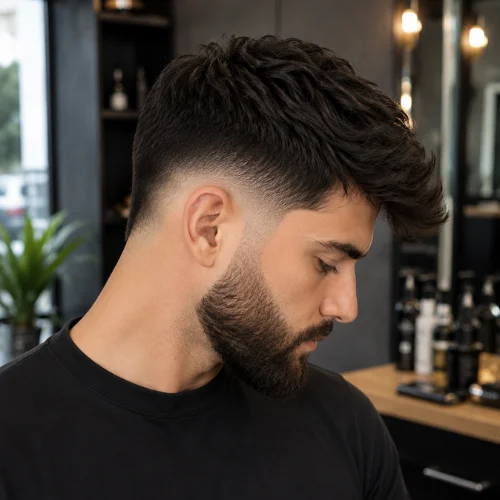
The biggest mistake is a gap of bare cheek. Leave length at the sideburn so the fade can blend straight into the beard. A few drops of beard oil keep the hair flat, and the burst fade with beard ends up reading as one connected look.
Burst Fade Long Hair
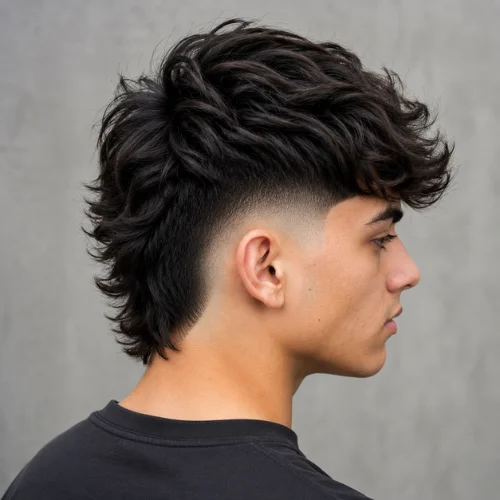
Clients who refuse to give up length usually come back after 3 weeks surprised that the long back still looks intentional. The burst only clears the area around the ear, so long hair keeps its flowing movement. I leave a full top heavy enough that the long top ends up falling forward rather than sitting flat.
Burst Fade Afro
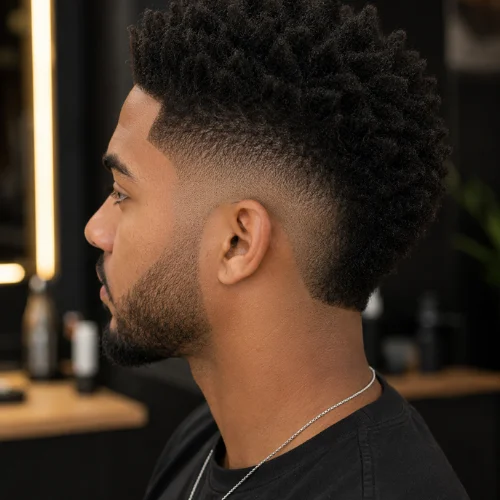
Long hair forgives small errors, but a coiled crown in the 3C–4C range doesn’t, because the clippers have to respect how that texture grows. I cut the arc behind the ear first, then shape the afro until the outline reads rounded. Misjudge that curve and the whole afro shape looks lopsided from the side.
Taper Burst Fade
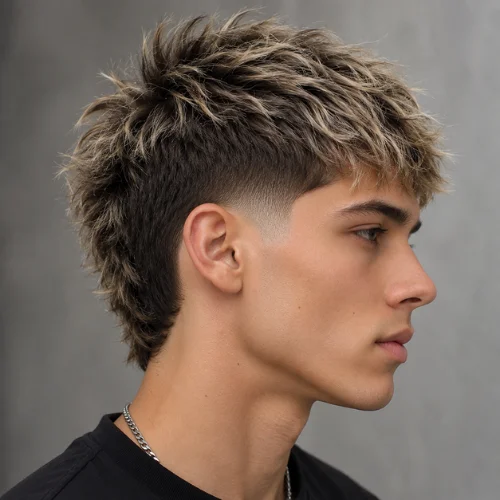
Fine hair brings the opposite problem: it has too little density, so sharp edges matter far more because any patchy scalp shows instantly. A low taper stays versatile, and a subtle burst around the ear adds shape without thinning things further. Treat it as a base for everyday wear, and move up to a mid taper if thin hair needs lift. The taper burst fade still reads clean either way.
Burst Fade Fringe
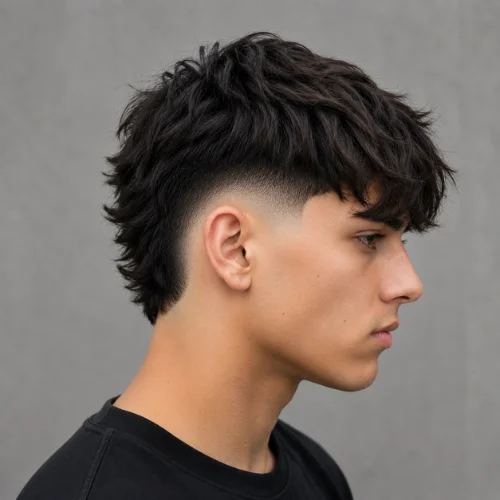
With the sides handled, the front decides everything. Crisp lines flatter oval faces most, though a choppy forward fringe works on nearly anyone. Some clients want a natural back with the skin fade kept to the sides. For heart faces, a textured fringe or side-swept fringe softens the forehead. Of all fringe variations, a textured front grows out the most forgivingly.
Burst Fade V-Cut
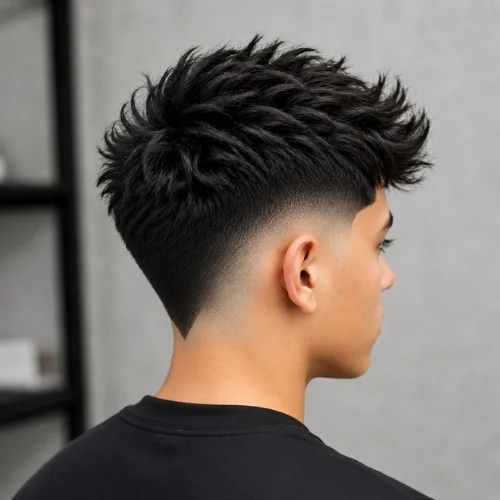
Turn the client around, and the neckline becomes the statement. For an alternative finish, I carve a V-shaped neckline beneath the burst so the back points downward instead of sitting square. It suits anyone growing toward a full mullet who isn’t ready to commit, and the V-cut keeps that mullet energy controlled.
How to Ask Your Barber for a Burst Fade
Most bad burst fades go wrong at the nape, not the arc, so treat your request as a five-point brief. Cover arc placement and arc height for your head shape and side profile. Then give a guard number or skin as the shortest finish, along with the back length, a top length that suits your hair type, and the neckline shape.
Settle the hairline, sideburn, and beard blend too. Then show reference photos from several angles, because a single front photo hides the curved arc completely. A side shot and a back shot tell the barber exactly where the fade stops and how the silhouette should look.
Common Mistakes / Miscommunications
Calling it a drop fade is the classic mistake, and it isn’t the same thing. A drop curves down around the back of the head, while a burst stops at the ear and keeps your back length. Saying “taper” causes the same kind of confusion.
Another slip is mixing up height with closeness. If you say “higher” when you mean “shorter,” the cut drifts into a standard fade. Photos from two angles fix both problems before the clippers start.
How to Style a Burst Fade
Heavy product flattens the top, so go lighter. On damp hair, use a pre-styler: sea salt spray for straight or wavy hair, mousse for fine hair, and a light cream if you’re curly or coily. Blow-dry upward and forward on warm, working the roots with your fingers rather than brushing. Blow-drying this way gives lift and separation and keeps the top voluminous.
Pick a direction, then warm matte paste, clay or wax in your hands and push it up and out. A slightly messy finish holds better than a neat one. Short tops only need volumising powder or a light texturiser and a quick tousle, while medium tops and mullets suit pomade plus hairspray. Curly hair should air-dry or diffuse, with curl cream and a drop of oil for a natural look.
Best Hair Products
Start with a clarifying shampoo to strip build-up, then follow with a hydrating conditioner. For a matte finish with strong hold, texture clay beats molding paste and wax. For volume without weight, reach for texture powder, styling powder, or volumising powder.
Pomade adds a medium shine for a sharper look, styling cream gives a soft hold, and sea salt spray works as prep before drying. Lock everything in with hairspray. For curls, use curl-defining products and a few drops of argan oil.
Maintenance & How Often to Get It Cut
Regrowth shows first at the arc and leaves it blurred. A high skin burst cut with a double zero needs a visit every 1–2 weeks. A mid burst on a guard lasts 2–3 weeks, and a low burst with a soft taper stretches to 3 weeks, or three to four weeks if your hair grows slowly. In general, a low cut lasts longer than a high one. Hair type matters too: straight-hair cuts show growth faster than long-hair tops.
At home, a neckline trimmer handles neckline cleanup around the back. Don’t try re-cutting the shape or a design yourself; leave that touch-up to a professional. Book a trim every two weeks, and if you wear it down to skin, 2 weeks is the maximum. Use a shampoo and conditioner that wash out cream and pomade to keep that classic, fresh-looking fade.
Frequently Asked Questions
What if it was cut too high or short?
Don’t panic, because this is one of the easiest fixes. A too-high arc gets softened by blending the edge lower. If the hair is too short, wait a few weeks and then reset the shape.
How do I ask my barber for one?
Bring front photos and back photos, and point to the curved arc around the ears where the curved burst should smoothly blend into a longer back. Tell them the top height and back length you want so they don’t have to guess.
What is a burst fade?
It’s a half-circle fade that curves around the ear like a sunburst. The neckline and back stay full, which is why your reference photos matter so much.
Where did it originate?
Its origin traces back to barbershops in the Southern U.S. in the early 2000s. Barbers there wanted a fade that kept the back heavy instead of clearing it out.
Is it still trending?
Yes, it’s trending harder now than ten years ago. Mullets and mohawks came back, and curly textures show the arc off better than almost anything else.
Is a burst fade the same as a mullet?
No. A mullet is about back length, while the burst is a side technique that curves the sides. They pair so often that people mix them up, but the burst can be combined with any top style, even when the back has no extra length, because fades are that flexible.
Which hairstyles pair best with it?
The strongest matches are a curly top, natural curls, a textured crop, a mohawk, a faux hawk, or a mullet. In practice, textured crops, faux hawks, mohawks, and mullets make up most burst fade requests.
Burst fade vs drop fade?
A drop fade arches lower behind the ear and follows the neck. A burst curves around the ear and stops there, so the nape stays untouched.
Who suits it best?
It looks natural on oval faces, and it helps round faces because the arc makes the jawline look sharper. It shows best on wavy hair, though straight hair also works with a tighter blend.
Can curly hair get a burst fade?
Yes, curly hair is actually its best canvas. It should be cut on dry hair so the curls sit naturally, and the arc can go higher to balance the height on top.


